how do we work?
How do we work?
We combine different therapeutical approaches – cognitive-behavioral therapy, schema therapy, Inner Child work and bodywork according to A. Lowen’s bioenergetic analysis. In our work, we refer to all modalities: mind, emotions and body.In the therapeutic process, we combine emotional experience with body sensations, as well as acceptance and cognitive structuring. Thanks to this, we build new, healthier structures of feeling, thinking and behaviors. We can call them – after schema therapy – the Healthy Adult mode – a good Parent who, in response to our emotional needs, looks at us with eyes full of love and acceptance.
Cognitive behavioral Therapy
The traits of cognitive-behavioral therapy that we value the most are its active form, structuring and building cooperation between the therapist and the patient. In our work, we use psychoeducation, establishing necessary theoretical elements during sessions or workshops (e.g. attachment theory, types of attachments, abuse mechanisms, healthy adult traits and many others). In this way we resource with knowledge, we build structure of understanding our own experience and the patterns of sensing, thinking and behaving. Another important objective is building an active, autonomous part of a Healthy Adult, equipping with self-therapy tools, so that over time each person becomes their own therapist, building an understanding and caring part. The cognitive-behavioral approach also gives the opportunity to flexibly choose methods based on deepening the conceptualisation of issues that the patient brings.

Schema Therapy
In our work, we focus on discovering, experiencing and healing the patient’s basic emotional needs (e.g. safety, stable attachment, trust, care, support, love, acceptance, being seen, autonomy and influence, and many others) that have often been deprived or traumatized in the past and through the formation of maladaptive patterns, they influence our adult life.

Inner Child work
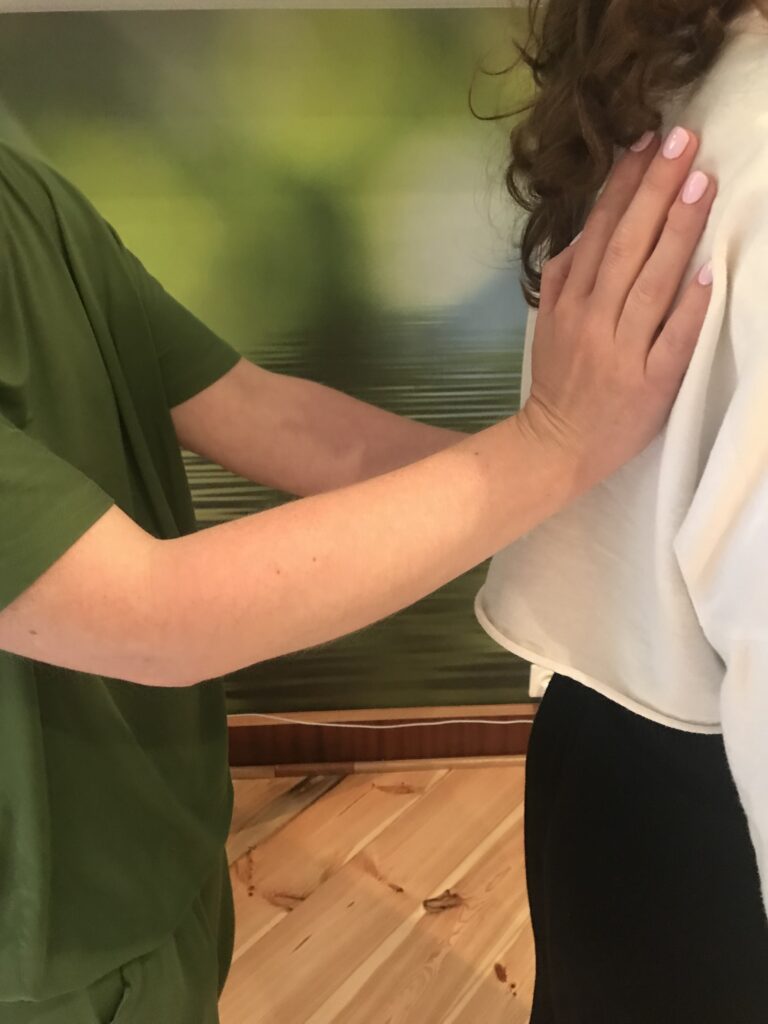
Working with the Inner Child, we go back to the developmental stages of childhood (according to M. Mahler) and using various therapeutic methods (Gestalt therapy, working with modes, imaginations, visualizations, TRE, working with safe touch), we often come to traumatic experiences that don’t allow our further emotional development. We also work with early childhood and relational trauma. By correcting the experience, working with resources, we build a Healthy Adult part, which, becoming stronger and stronger, can embrace our inner sensitivity and uniqueness. The ability to contain wounds and childhood experiences also allows us to draw from the resources of inner strength, love for ourselves and others, and compassion.

Bodywork
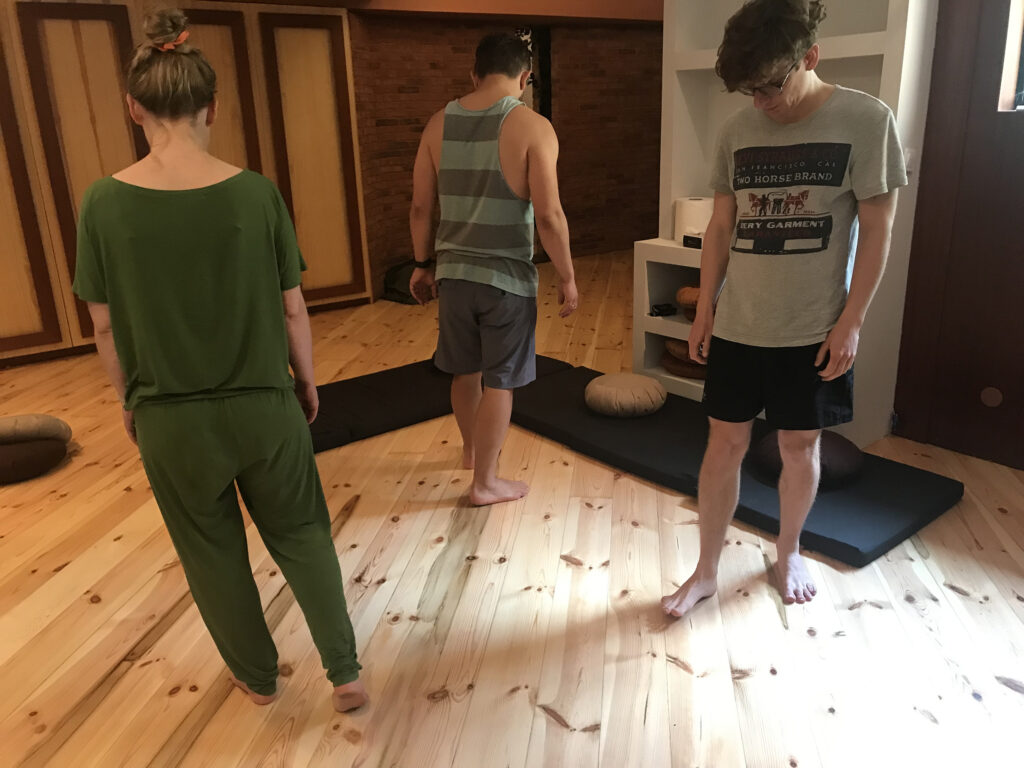
In the beginning of the therapeutic process, we spend time working with breathing and grounding. Deep breath to the pelvic floor and full, non-automatic sensing of the body allow us to feel our emotions and accept them, rather than blocking or separating. Then we can take a more conscious look at the defensive structures that block us and feel the hurt caused by unmet needs in childhood. In order for deep emotional work to be possible and tolerable, we need to include a body that allows emotions to be contained and flow freely. Working with the body helps to remove energy blockages and chronic tensions that are associated with developmental shocks. Emotional expression and cathartic methods help to gradually break free from restrictive patterns and defense strategies, leading to the expansion and maturation of the patient. They restore flexibility, openness and spontaneity in the body, as well as the ability to feel joy and pleasure.
Essence Work

Meditation

Group dynamics
At the Bhavana Center, we complement individual work with group work. For those just
starting out, we recommend participating in one of our beginner groups (Returning to
the Inner Child, Parts 1 and 2). During this 2.5-day adventure, we have much more time
than in an individual session to experience breathing, grounding, trembling (TRE
exercise), and other gentle forms of bodywork and meditation. The choice of
subsequent groups/workshops depends on our therapeutic goals and the theme that
resonates with us. Generally, we view group work and group dynamics as another
healing factor.
The group is a massive force that allows the corrective experiences to take place. The
group functions as a mirror for every individual process, or better said the individual
finds many mirrors for himself in every other individual in the group. In that sense, the
feedback that is the individual receives within a group can be a massive catalyst for his
healing.
Many individual processes take place within a group that affect each member. People
become touched and identify with what their fellow group members experience and
share. This in itself brings more awareness, clarity, but also more humanness and
compassion for oneself and others. Sharing the depth of our pain brings more trust
and intimacy and brings each member of the group closer. The fact that we recognize
that every one of us suffers from the same hurts and wounds, feels joy for the same
things, makes us feel equal and part of humanity.